Sheds Add More Than Storage

One of my mountain listings was a neat old cabin that sits right on the edge of Mill Creek, not far from Idaho Springs.  It was great place, but with only two bedrooms, it was a bit short on space.  Her solution was to add a large shed as part of a carport.

At first glance when you opened it up, you expected it to be filled with mountain necessities like a snow blower, chainsaws, and shovels.  Surprisingly, it was, as she called it, “a party room.”

Instead of being strictly utilitarian, it was adorned with bright colored fabrics, Xmas lights, and a large Persian rug.  It was a pretty good sized shed, about 12×14 feet, about the size of a small bedroom. So there was room to “party.”

For a small home, the shed added some great space for not a lot of money.  Sheds that sized usually run less than $2000, depending on what you use for a pad. A concrete pad is always nice, but pressure treated wood skids or small concrete blocks can do a good job of keeping the shed floor above the soil and preventing quick deterioration. Insulation and a small heater can keeps thing warm.  A large window or skylight can do wonders for keeping the space bright and sunny.

Here’s a great article that sheds a little light on new ways to use your shed.

Can I Handle More Than One House?

As a Denver area Realtor, my answer for most problems is to buy a house.  As an attorney friend of mine once told me, “When all you have is a hammer, everything looks like a nail.”

More and more people are thinking about buying investment property.  The initial desire always seems to be fix and flips.  But frankly, if you can’t afford to go after homes well above $200,000, it’s tough to make much money on fix and flips.  The cheaper properties are in short supply and, usually, leave little margins on the flip.  More expensive properties bring greater reward, but with greater risk and the need for a bigger initial investment.

An alternative to getting into investment properties, particularly at the lower end of the spectrum, is either a fix and hold, or to purchase a home that doesn’t need work but that can be a solid rental.  Areas around colleges, hospitals, downtown, the airport, and large business centers can be great areas for rental property.  Experienced investors will tell you that accumulating property is a proven and generally reliable to amass wealth.  Over the long haul, investment property will usually appreciate, as well as bring in a monthly positive cash flow.

One way to get into purchasing investment property is with a self-directed IRA.  With that, you can roll over retirement funds into a managed account that can be used to buy real estate.  It’s a tricky way to access money to buy property.  It’s not that complicated to do and several area banks can handle managing the account.

But, like with most things, you need to figure out if this is a good fit for you.  Being a landlord comes with lots of challenges.  Of course, if you don’t mind giving up some profit, you can always turn your rentals over to a property manager.  That way, they can answer the phone in the middle of the night when the pipe breaks.

You might want to check out this article about being a landlord.

http://www.foxbusiness.com/personal-finance/2013/02/04/are-ready-to-be-landlord/

Hot topic: Your Furnace

Many homes around town use a furnace for hot (and cold) air throughout their homes.  What started a long time ago as a simple gravity fed and coal fired monster that resembled a cross between an iron lung and an octopus has evolved into a computer controlled, high efficiency piece of modern technology.

I remember when my company Main Street Theatres was operating the old Oriental Theatre over on 44th and Tennyson.  The theatre was heated by a boiler that was the size of a locomotive.  When that beast fired up, one glance inside and you knew that the Public Service bill was going to hefty.  I’m pretty sure it would have been cheaper (and probably more efficient) to burn dollar bills.

I recently switch my home furnace over to a high efficiency unit.  It cost close to $5000 to upgrade my furnace.  This furnace uses a DC motor that runs all of the time, constantly moving air through the house .  Oddly enough, this is the recommended setting.  I knew exactly when my old 1970’s furnace was starting up.  It would kind of rumble and in a few minutes warm air would blast out of my ducts like a hair dryer set on high.  Now, it just happens seamlessly… with no drama.  I forget that it’s even working, but my house is warm.  So, something must be happening.  I still haven’t figured out if I’m saving money.

If you’re interested in  an excellent explanation of modern furnaces, spend a moment with this article from Green Building Advisor.

http://www.greenbuildingadvisor.com/blogs/dept/musings/all-about-furnaces-and-duct-systems?utm_source=email&utm_medium=eletter&utm_content=fhb_eletter&utm_campaign=fine-homebuilding-eletter

Honey, You Need to Mow the Driveway!

It seems like every house should have something that amps up it’s cool factor.  If you have big bucks, there are things like in-ground pools, sunken living rooms, vaulted ceilings and home theatres that might raise your cool factor.  If you have a more moderate budget, the cool factor might need to be redefined.  You might have to settle for an aluminum Christmas tree or a high tech refrigerator, but that can be cool.

One thing that always ratchets up the cool quotient is a rockin driveway.  Back when the Parade of Homes only featured a dozen or so super houses, it seemed like there was always one that had a neat driveway.  The ones that had some combination of grass growing out of the cement always got lots of attention.  Hey, if you can get grass to grow out of your driveway (intentionally) you’re cool.

You can see some pretty great driveways in this article originally posted on Houzz.  The one thing about these organic driveways, you gotta mow them.  Isn’t it bad enough I have to mow the grass?  I’m not sure I want to mow my driveway.

Kitchen Remodeling Ideas

I have to admit that my kitchen gets a real workout.  Every day, the kitchen in my Park Hill home seems to get a little older.  I’m pretty sure it’s aging faster than the rest of the house.  Even on days when I’m not cooking, the kitchen is still the command center for the house.  It’s where the mail gets sorted.  It’s where my cellphone gets recharged, next to where my wallet and car keys sit.  My wife’s purse has it’s own spot.  It’s place where you put the stuff you don’t want to forget to take with you when you leave.  I wish I had about twice as much counter space.  Of course, if I had twice as much counter space I have twice as much stuff to fill it up.  I found this to be true when I built a 1000 sq, foot garage in my backyard.  There should be no way to fill up a 1000 sq. foot garage… but somehow I found enough stuff to fill my garage.  

Houzz recently put out a list of kitchen remodeling ideas that don’t require a full blown, down to the studs redeux of the kitchen.  The pictures are great, although my kitchen will never look like any of them.  Where are the 5 day old bananas and cell phone charger?

Shoot the Laundry

I saw this article on Houzz.  It has some neat ideas on how to put a laundry chute in your home.  

When I was a kid, I always thought a laundry chute was just the neatest idea ever.  It might actually make laundry fun.  What kid wouldn’t get a kick out of launching their dirty clothes down two story chute to the basement? Of course, laundry wouldn’t the only thing getting dropped down to the basement.  Has anybody seen the cat?

Senior Property Tax Exemption – Homestead Exemption

Seniors over 65 may be eligible for a little break on their property taxes.  Here’s some info from the Boulder county website, although this program is in effect for all Colorado counties, as well.

Senior Tax Exemption

The Colorado Constitution establishes a property tax exemption for qualifying senior citizens, surviving spouses of senior citizens who previously qualified, and for disabled veterans.

Deadline

Applications must be filed no later than July 15 to have the exemption apply to your tax bill the following year.

Eligibility Requirements

Qualifying seniors must meet the following eligibility requirements:

  • Must be at least 65 years old on January 1 of the year in which he or she qualifies.
  • Must be the owner of primary residence, on record, for at least ten consecutive years prior to January 1.

Once an exemption application is filed and approved by the assessor, the exemption remains in effect until a disqualifying event occurs.

Qualifications, Instructions, and Application Forms

  • Short form (771 KB) (118 kb)
  • Long form (650 KB) (for properties held in trusts, LLCs or other legal entities) (190 kb)

Applications are also available at the Assessor’s office, senior centers and other locations.

Exemption Amount

For those who qualify, 50 percent of the first $200,000 in actual value of their primary residence is exempted, for a maximum exemption amount of $100,000 in actual value. The State of Colorado pays the property taxes on the exempted value.

New Ideas for Using Plywood around your home

I’m always looking for news ways to use inexpensive materials.  Plywood, galvanized pipes, pvc, and corrugated steel all can be repurposed into something that works with many types of homes.  Modern homes and even mid-century ranches can use these types of materials in all sorts of ways.

Check out this article from Houzz:  http://www.houzz.com/ideabooks/20779775?utm_source=Houzz&utm_campaign=u403&utm_medium=email&utm_content=gallery3

A Rewiring Idea for Old Houses

A few years ago, I restored a home in Kansas City, Kansas.  It was built in 1920 and was lost by its previous owners to a HUD foreclosure.  One of the problems we faced with the old house was the wiring.  It had the classic knob and tube wiring to go with it’s classic architecture.  We didn’t have a giant budget for the home, so we had to leave some of the knob and tube in place.  With plaster over lathe walls, if you’re going to rewire, you have to contend with how to handle the wiring without making a royal mess of the walls.  If the walls are shot, that’s great, you’re going down to the studs anyway. But, if you’re going to save your walls then you need to find another way to rewire, unless you don’t mind a lot of patching of your plasterwork.  I don’t know about most people, but when I fix a plastered wall, you know it’s not original equipment.

While we were remodeling the KC house, we considered using chains to drop wiring through the attic into the stud bays on the second floor.  We could have also fished wiring up from the basement into the lower level walls. But with limited time and limited budget, we decided to leave the old wiring that was working fine intact and only address the wiring in the newer portions of the house that we were drastically remodeled. I must say the building codes KCK at the time seemed to be a rather “liberal” and the inspectors never brought up. While we did the remodeling several years ago, I must admit that leaving the knob and tube wiring in place has often crossed my mind. I find myself asking was a good decision?

At the time were remodeling the house, I often consulted  books on old houses including, George Nash’s Renovating Old Houses (a great book, by the way).  There are a variety of different opinions on knob and tube wiring, however several people said if it works, it works.  Of course, the problem is it’s virtually impossible to track down a short in knob and tube wiring since the hot and common leads don’t run together.  But in our old house, the old wiring was fine and functional,  and the new wiring that was handling the greater loads was all up to modern standards.  Hopefully the house hasn’t burned down in the meantime.

As an old house enthusiast and a dedicated do it yourselfer, I still rely on books and websites to help me improve my skills. One of the websites I follow is Fine Homebuilding.  And, I subscribed to their daily e-mail tips. Recently I received a tip that addresses the problems of rewiring an old house without disturbing the plasterwork.  It’s actually a simple concept that is similar to Cove Mould wiring, although it’s not visible outside the walls.

It’s actually a clever idea that hides the wiring behind the baseboard and protects it underneath a metal covering so can’t be accidentally penetrated by a finishing nail (or the cable Guy). With this tip, he simply runs the wiring below the finish plaster in a gap that sits behind the baseboard and in the corners he puts a fairly severe bend in the wire to accommodate the change of direction.  It seems like a good idea to me.  While, I’m no expert I can recognize a good idea when I see one.  Here’s the link to the tip from Fine Homebuilding. Good luck with your old house.

http://www.finehomebuilding.com/how-to/tips/rewiring-vintage-house.aspx


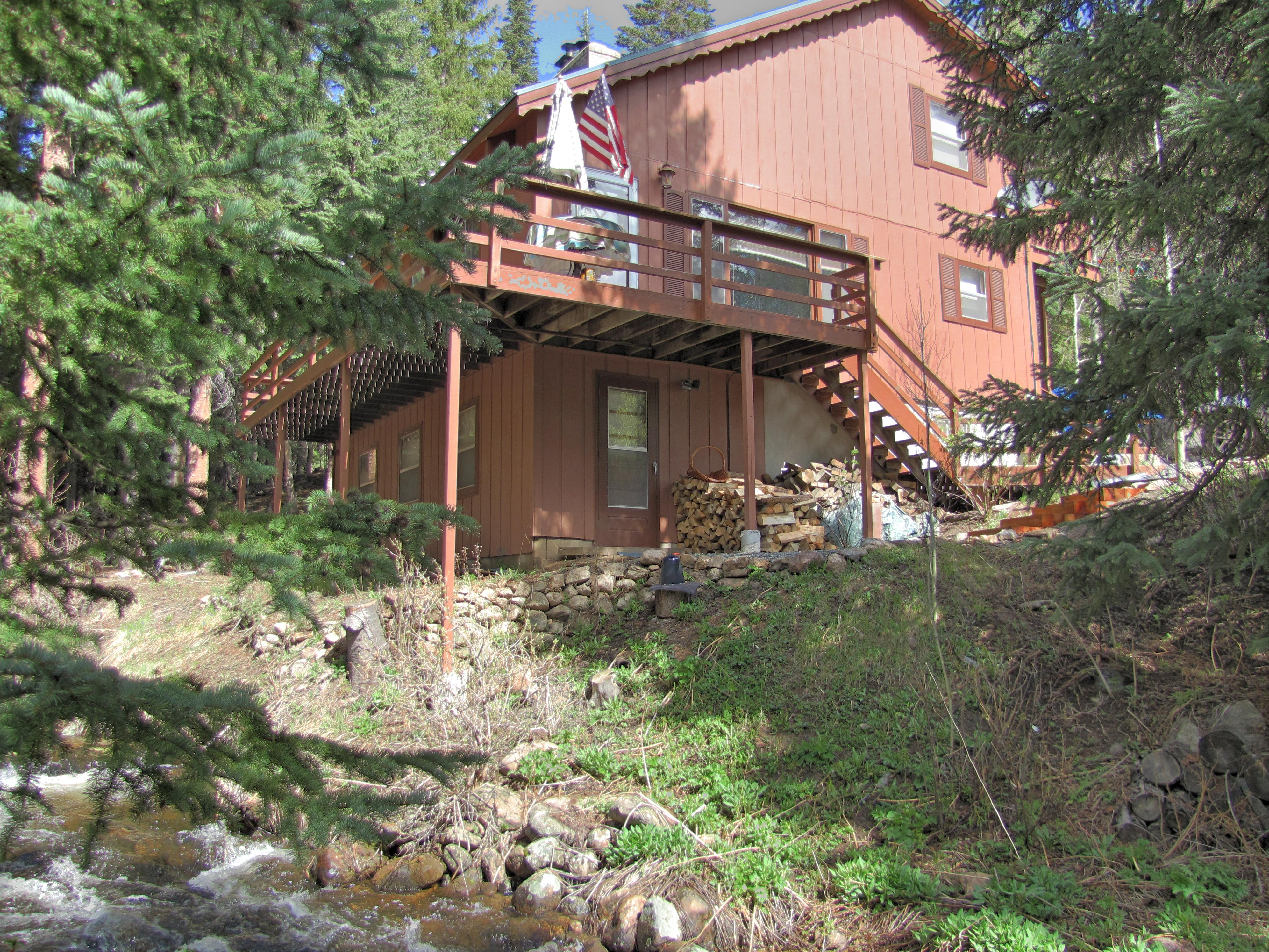
3095 Mill Creek Drive in Dumont

Image

Welcome to 3095 Mill Creek Drive…

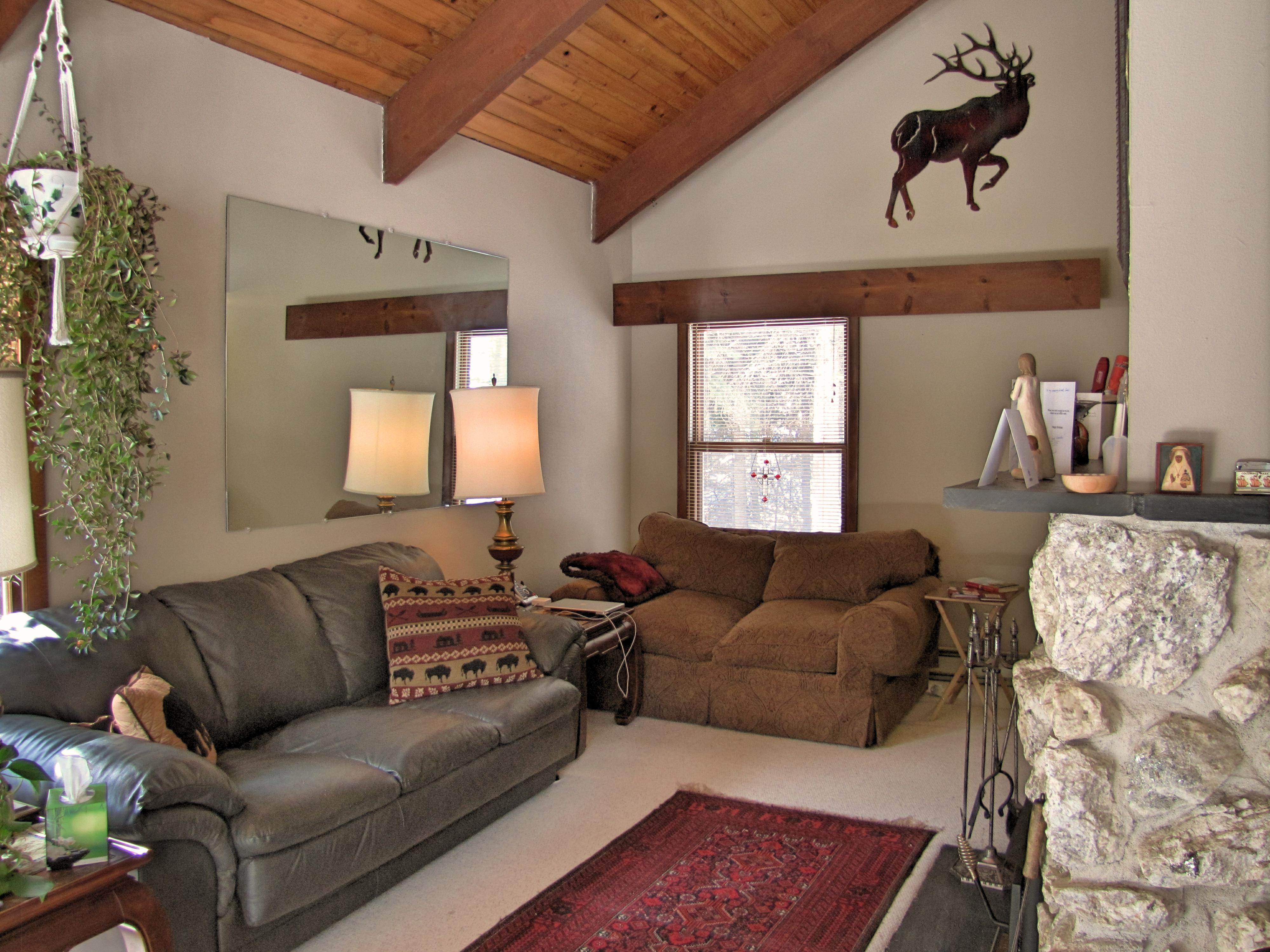
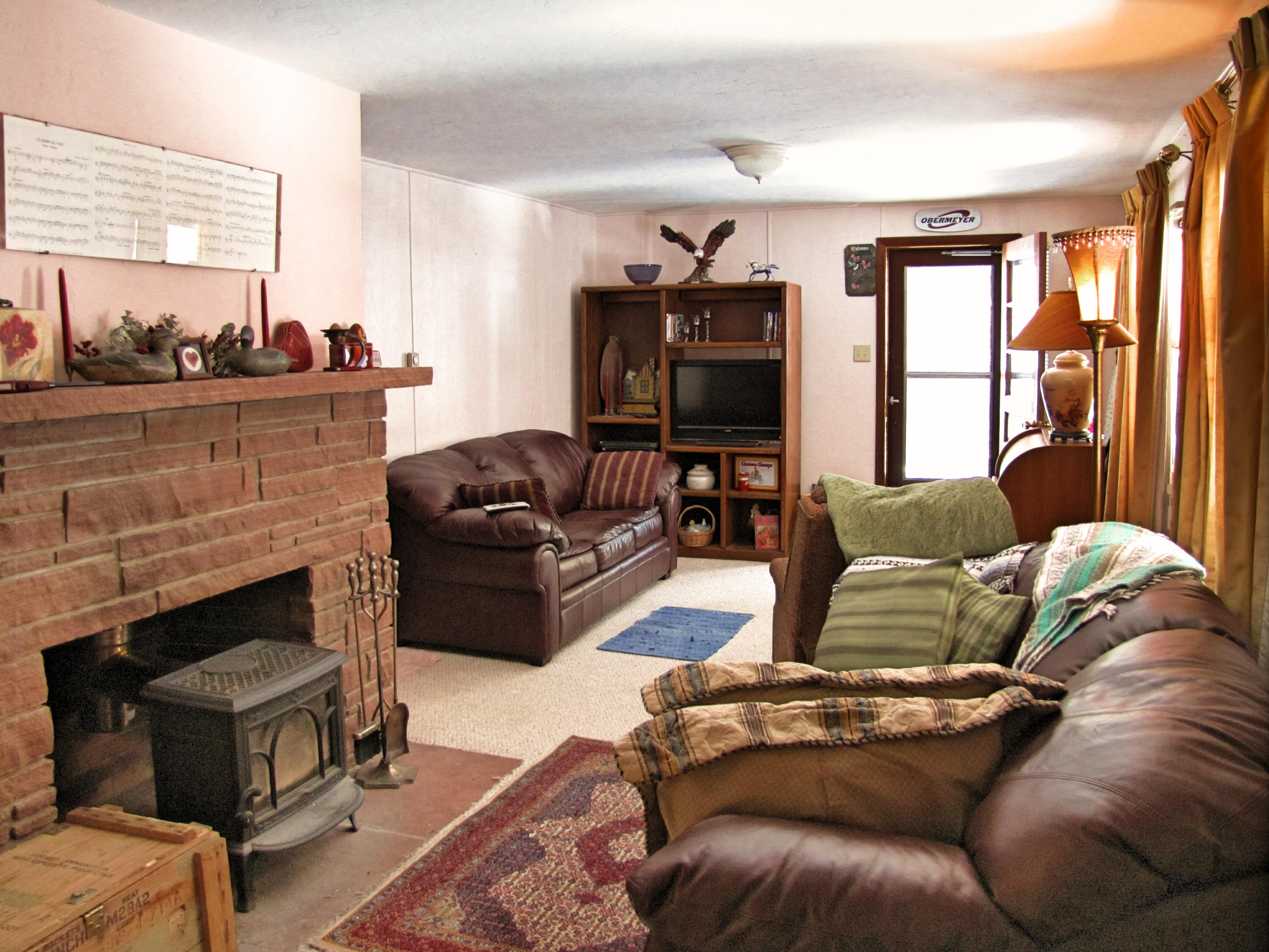
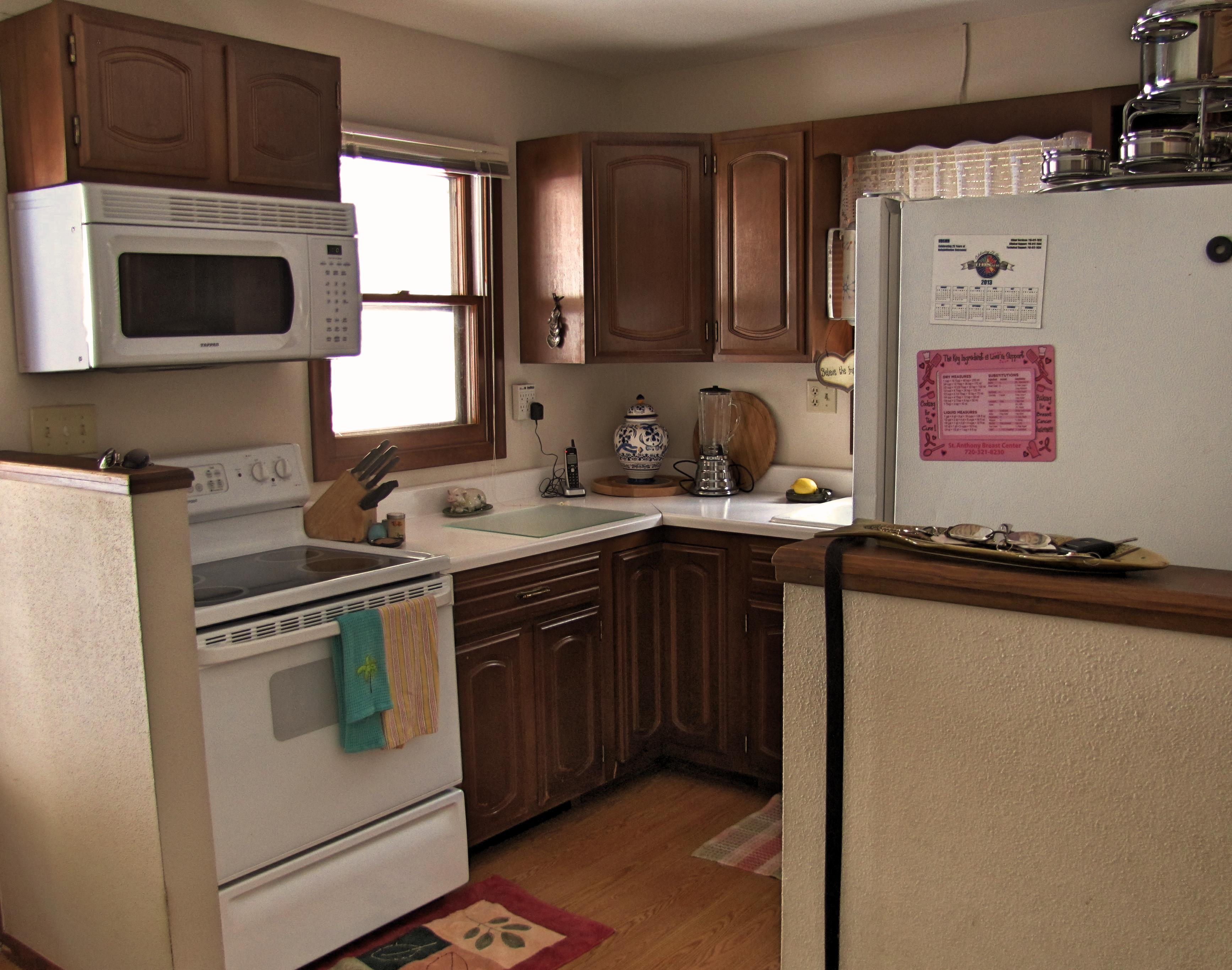
  • 4 Bedrooms, 3 Baths
  • Creekside- Waterfront Property
  • 2262 Square Feet on three levels
  • Backs to national forest
  • Year Round Access on County Maintained Road
  • Just 45 Minutes from Denver & 20 Minutes to Ski Areas
  • MLS# M1145064

This beautiful mountain retreat is just 45 minutes from Denver.  Just steps from the rushing waters of Mill Creek, you’ll enjoy true mountain living, but with amazing convenience. Local ski areas, shopping, restaurants, and I70 are just minutes away.  Surrounded by national forest, hiking, snowshoeing, and mountain biking begin right at your doorstep.

Exclusive Mill Creek Park offers year round access on a county maintained road, making this home perfect for a weekend getaway or an unique family home.  With four bedrooms and three baths on three levels, you’ll have plenty of room for family and friends. 

Two wood burning fireplaces keep the home warm and cozy.  So, throw another log on the fire and enjoy life on the creek.  This a rare opportunity to own a home in Mill Creek Park!

(Directions:  Take I70 west to exit 235. Turn right at Post Office (Mill Creek Road/County Road 261). Take Mill Creek Road about 3.1 miles. Home is on the left.)

ImageImageImageImageImageImageImage

About Mill Creek Park-

Located just three miles from I70 at the Dumont exit (not far from Idaho Springs), Mill Creek Park is a small enclave of mountain homes.  Most of the homes are located right on Mill Creek.  It has a community water system and a wide variety of architecture and types of homes.  Some of the homes are smaller, traditional mountain cabins, while others are larger, contemporary mountain homes.  This is a great location that provides easy, year round access to ski areas, shopping, restaurants, and all types of recreation.


For more information go to: HeartoftheCityHomes.com


Need a finance calculator: http://academymortgage.com/Home/CustomerTools